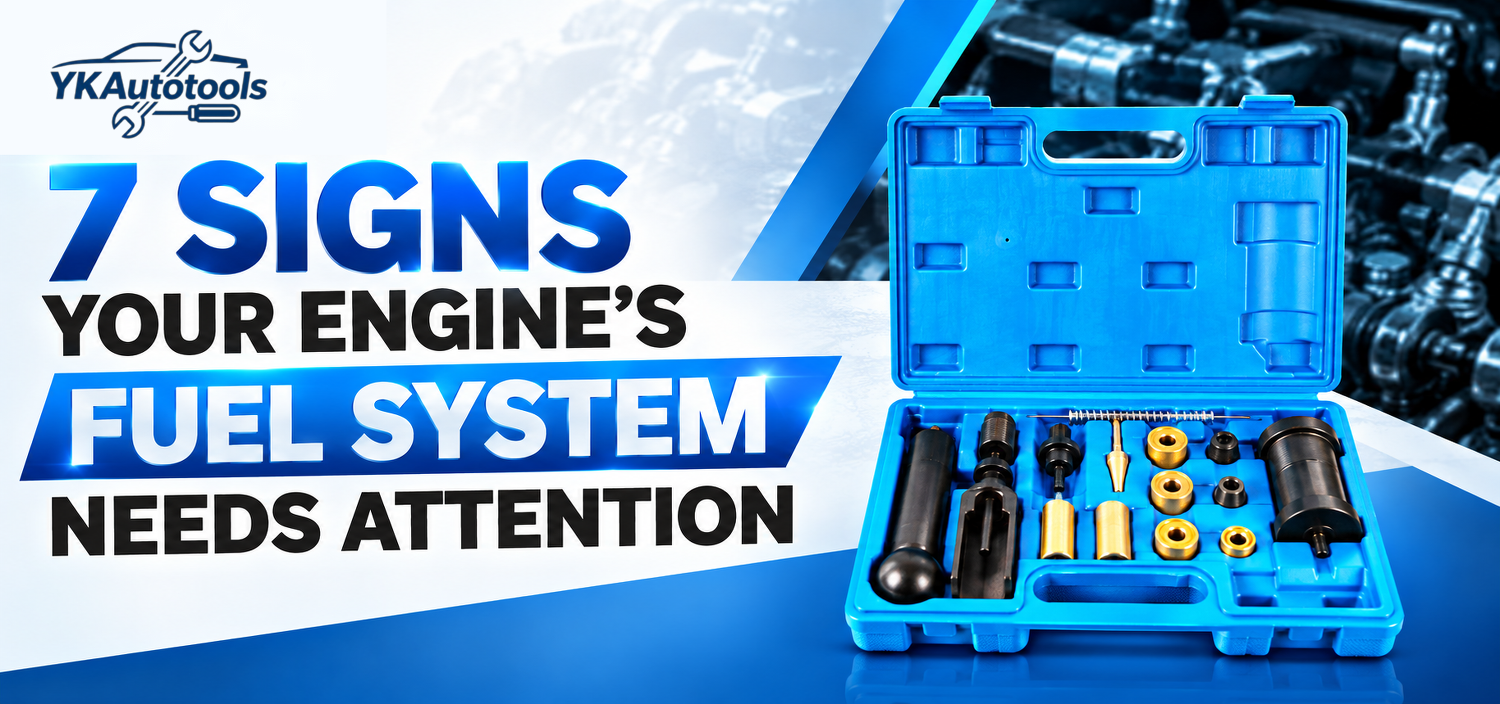
Fuel injector removal tool kit for VW and Audi engine repairs

7 Signs Your Engine’s Fuel System Needs Attention

Your car can give you small clues when something is wrong with the fuel system. You may notice a change in the way the engine starts, runs or responds when you press the gas pedal. These changes can come from a clogged injector, a weak fuel pump or another fuel system part. They can also be caused by other engine problems, so it is important to find the real cause before replacing anything. If the injectors are the problem, a proper Fuel Injector Removal Tool  can help remove them without damaging nearby parts.

Signs Your Fuel System May Have a Problem

Most fuel system problems start with small changes in how your car feels or sounds. Paying attention to these changes can help you know when the car needs to be checked.

1. Your Engine Takes Longer to Start

A healthy engine should start without much trouble. If you turn the key or press the start button and the engine takes longer than normal to start, it is worth paying attention to. A weak fuel pump may not send enough fuel to the engine. A dirty fuel filter can also slow the flow of fuel. A leaking or clogged injector may cause the same problem.

However, hard starting does not always mean there is a fuel system problem. A weak battery or worn spark plugs can cause it too. If the problem keeps happening, have the car checked.

2. Your Car Feels Slow When You Accelerate

You press the gas pedal, but the car feels slow to respond. It may hesitate, jerk or take longer than usual to pick up speed. The engine needs more fuel when you ask for more power. If the injectors are clogged or the fuel pump is weak, the engine may not get enough fuel.

A dirty air filter or a faulty sensor can cause similar symptoms. A mechanic should test the car before any parts are replaced.

3. The Engine Runs Rough at Idle 

A rough idle is easy to notice when you are stopped at a traffic light. The car may shake or the engine speed may move up and down even when your foot is off the gas pedal. Injectors that do not spray fuel evenly can make one cylinder weaker than the others. This can cause the engine to run unevenly and make the car shake. Vacuum leaks and worn spark plugs can also cause rough idling. This is why the fuel system should be checked along with other possible causes.

4. Your Car Is Using More Fuel Than Usual

If you are filling the tank more often even though your driving has not changed, there may be a problem. An injector that leaks or stays open for too long can send too much fuel into the engine. A dirty injector can also make the engine work harder.

Other simple things can affect fuel economy. Low tire pressure and heavy loads can make the car use more fuel. Keep track of your fuel use over a few tanks so you can see if the change continues.

5. Your Engine Starts to Misfire

A misfire happens when the fuel in one cylinder does not burn properly. You may feel the car shake, stumble or jerk while driving. It may be more noticeable when you speed up or drive uphill. A blocked injector can stop enough fuel from reaching one cylinder. But worn spark plugs and bad ignition coils can also cause misfires.

If the check engine light starts flashing during a misfire, have the car checked soon. Unburned fuel can damage parts of the exhaust system.

6. Your Exhaust Produces Unusual Smoke

The smoke coming from the exhaust can sometimes give you a clue about what is happening inside the engine. Black smoke can mean the engine is burning too much fuel. A leaking injector can be one possible cause. Blue smoke usually means oil is burning, while thick white smoke that does not clear can point to coolant.If a leaking injector is suspected, a mechanic can inspect it and use an audi injector removal tool if it needs to be removed for further testing or replacement.

This means that not all exhaust smoke problems are caused by the fuel system. Still, heavy or unusual smoke should be checked by a professional.

7. Your Check Engine Warning Light Comes On

Modern cars use computers to watch the engine and fuel mixture. If something is not right, the computer may turn on the check engine light and save an error code. The code can help a mechanic know where to start looking. It does not always tell them which part is faulty. For example, a lean fuel mixture could be caused by a clogged injector or a vacuum leak.

Do not ignore the warning light. Clearing the code without finding the cause will not fix the problem.

When Should You Get Your Car Checked?

You do not have to wait until the car stops working before getting it checked. Arrange an inspection if a problem keeps coming back or starts getting worse. You should also get help if:

  • You notice several problems at the same time
  • The check engine light is flashing
  • You smell fuel around the car
  • The engine stalls while you are driving
  • The car becomes very hard to start

A mechanic will usually start by checking the car for error codes. They may also test fuel pressure and inspect the injectors. This helps them find the real problem instead of replacing parts based on a guess.

Why Using the Right Injector Tools Matters

Removing a stuck injector is not always an easy job. Heat and carbon buildup can make the injector difficult to pull out. Using the wrong tool can also damage the injector or the parts around it. The right tool makes the job easier and gives the mechanic better control.

  • Helps remove stuck injectors: A proper audi injector removal tool  can give a strong and steady grip on the injector. This makes it easier to remove when it has become stuck.

  • Helps protect engine parts: Using screwdrivers, pliers or other unsuitable tools can damage the injector seat or nearby parts. The right tool is made for the job and helps lower this risk.

  • Makes the repair easier: A tool designed for injector removal can save time and reduce the need for excessive force. This can make the repair simpler for the mechanic.

  • Keeps the engine in position: Some VW and Audi repairs also involve the timing system or high pressure fuel pump. Flywheel locking tools can hold the crankshaft in place while the work is being done.

  • Works with specific engines: Different VW and Audi engines can use different injector designs. Choosing the correct Fuel Injector Removal Tool helps make sure the tool fits the injector and the job can be done properly.

Final Thoughts

Fuel system problems often start with small changes in the way your car behaves. Paying attention to these changes can help you find a problem before it becomes more serious.

A single symptom does not always tell you what has gone wrong. Other engine parts can cause similar problems. If you notice something unusual, getting the car checked can help prevent unnecessary repairs and bigger costs later. If an injector does need to be removed, using the right equipment can make the job much easier. YKAutotools offers VW and Audi injector tools, including Fuel Injector Removal Tool options, audi injector removal tool choices and flywheel locking tools for different repair needs.
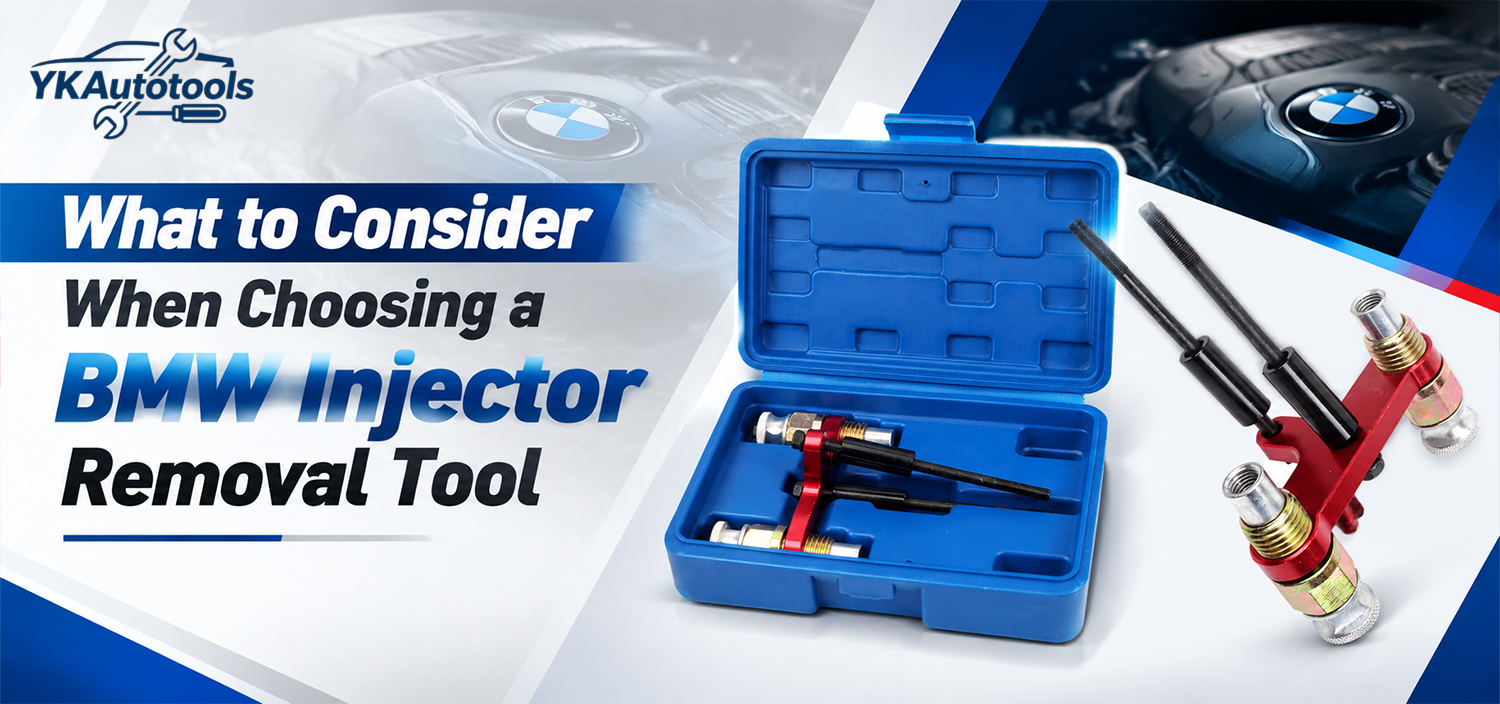
BMW Injector Removal Tool for BMW Engine Repair

What to Consider When Choosing a BMW Injector Removal Tool

Choosing the best tool for BMW injector work depends on several factors, such as engine compatibility, design, construction quality, and the type of job you need to complete. A BMW Injector Removal Tool should be compatible with the particular BMW injector and provide enough control to remove it correctly and safely. Checking these details before buying can help you select a tool that suits the repair. 

An appropriate tool can make removing the injector much easier, particularly when the injector has become stuck in the head of the cylinder. Instead of using a tool that isn’t suitable as well as applying the force in an incorrect way, a specialized tool offers a safer procedure. This is why examining the specifications of the tool prior to purchasing is essential.

What to Consider Before Choosing a BMW Injector Removal Tool?

The process of selecting the right tool to remove your injector starts by understanding what your BMW engine needs. The tool’s design, compatibility and build quality, as well as ease of use, as well as included accessories will all determine if the tool is appropriate for the task.

Considering these elements before purchasing will aid you in selecting the right equipment that is suited to the repair correctly and gives more control over the removal of injectors.

1. Check BMW Engine Compatibility

The first thing you should consider to determine is if the instrument works with the BMW engine. This is vital since BMW automobiles can have different designs for injectors as well as engine designs.For instance The BMW N20 N26 N55 Injector Tool is designed to be used in specific BMW N20, N26, and N55 engine applications. If you are working on any or more of the engines listed above, make sure whether the tool is designated for the injector you are using on your vehicle.

Don’t choose an instrument based on the fact that its product’s name includes “BMW.” Examine the specifications of the tool manufacturer and then compare them to the engine you’re servicing.Engine compatibility affects how the tool connects to the injector. A puller attachment or adapter must be fitted perfectly. If the connection isn’t adequate, the tool may not be able to provide the necessary control when removing.

2. Check How the Tool Removes the Injector

The mechanism for removal is an additional important aspect to take into consideration. A reliable injector removal tool will allow for force to be applied in a controlled way.Different tools may employ different techniques, including threaded pullers bridge system, a puller, or a slide-hammer mechanism. The best method is determined by the injector used and the BMW engine’s application. A bridge-style or threaded system can give a controlled pull force in situations where the injector is difficult to take off. 

A BMW fuel injector Removal Tool must be specifically designed to perform the task in a specific manner instead of relying on generic equipment. The right removal procedure will allow the repair to be easier to predict and manage.

3. Check the Tool’s Build Quality

Quality of build should be taken into consideration prior to purchasing an injector-removal tool. Removal of an injector that is stuck can take a lot of force, therefore the tool should be sturdy enough to handle the task.Find strong metal, strong threads, sturdy connecting components and well-constructed adapters. These parts must function with each other without bending or movement.

Threads that are not of good quality may be damaged by force. The adapter that is weak may slide off or fail to secure the injector properly. This could create more difficulty in the repairs and could cause additional issues. For use on a limited basis, the basic endurance may suffice. In a professional workshop however, the device could be used frequently. If so, selecting an instrument that is well-constructed can offer more value over the long run.

4. Consider Removal and Installation Requirements

Before you choose a tool, you should consider whether you just need to take injectors off or require new injectors.A tool that only removes the cylinder may be a good choice if your primary task is to remove older or damaged injectors. However, if your shop regularly replaces injectors, a tool that can also support installation could be more efficient.

The Fuel Injector Installation Tool can assist in the proper placement and installation of an injector, if the tool is specifically designed specifically for the intended use.Certain specialist kits include the removal and installation parts. This may make it less costly to buy distinct equipment at each step of repair. But, don’t assume that all injector removal kits will allow installation. Review the description of the product and the list of components included prior to purchasing.

5. Check the Included Adapters and Accessories

The accessories that are included make an enormous difference when selecting the right tool to remove injectors. Be sure to check the complete items included in the kit prior to purchasing. According to the model, the kit could include injector adapters, pull screws, bridges, spacers, installation elements or other accessories. These accessories permit the tool to operate with certain injector models.

The number of accessories available is not all that is important. The accessories should be appropriate to the engine and injector you’re working with.For instance, a kit comprising a number of adapters is not always useful if none of them match with your BMW injector. A simpler kit that has the appropriate components could be more suitable.

What Should You Check Before Buying the Tool?

Before purchasing a BMW injector tool, check these key factors:

  • Compatibility: Make sure the tool is specifically designed for your BMW engine and injector type.
  • Removal Mechanism: Check how the tool applies pulling force and whether the connection is secure during injector removal.
  • Build Quality: Look at the materials and construction to ensure the tool can handle the level of use you expect.
  • Installation Requirements: If you plan to replace injectors, check whether the kit includes the components needed for installation.
  • Adapters and Attachments: Review all included adapters, attachments, and accessories to make sure they are suitable for your repair work.
  • Overall Value: Don’t choose based on price alone. A cheaper tool may have poor fit or durability, while a more complete kit may offer better value for regular repairs.
  • Specific Repair Needs: Choose a tool that matches your BMW injector maintenance and repair requirements.

Why Does the Right Injector Tool Matter?

The correct injector tool is crucial since injector removal requires correct pressure and contact. A tool that is not suitable for the job will make the process difficult and could put pressure on the injector or the components around it. A specialist tool is created specifically for specific injectors. This could provide a better connection and make the elimination process simpler to manage.

The proper tool can help to reduce time spent in the workshop. If the right adapters and pulling parts are in place, technicians do not need to waste time testing different techniques or changing equipment for general use. For routine BMW maintenance the right tools for the job can allow injector servicing to be more efficient.

Final Thoughts

The most effective method to select the best BMW injector tool to begin with the specific BMW engine as well as the injector software. After verifying compatibility, think about the mechanism for removal, its construction quality, requirements for installation and the included accessories.

The right tool will offer a secure connection and a controlled force of pulling, while being sturdy enough for the task you have to complete. Spending a few minutes to verify the details prior to buying could make sure that there are no issues in the repair.

YKAutotools offers specialist BMW injectors for various applications like N20, N26 and N55 motors. By examining the specifications and information of the BMW fuel Injector Removal Tool technicians and workshops can select the right equipment for their particular repair needs.