

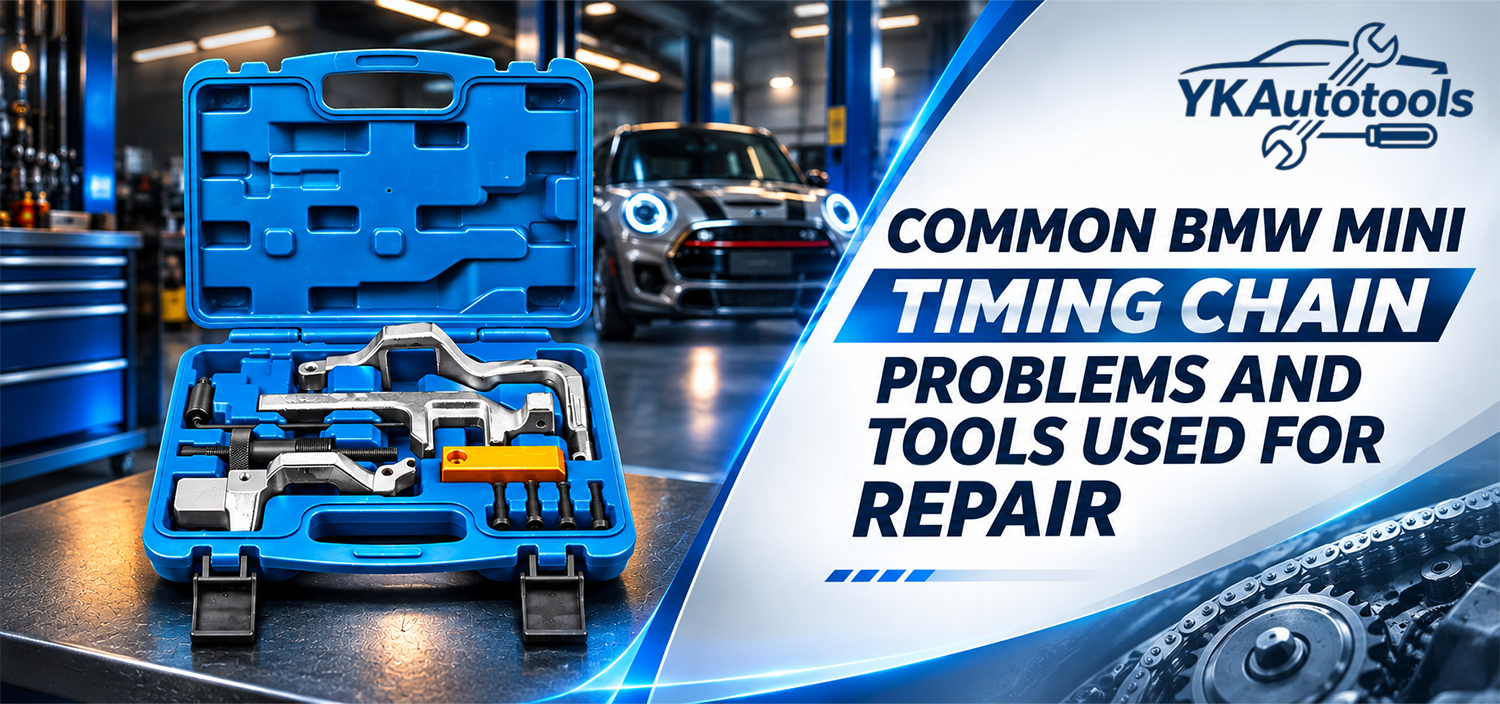
The most common BMW MINI timing chain problems are a stretched chain, a worn tensioner, and damaged chain guides. Fixing them safely takes a proper BMW Timing Chain Tool Kit that locks the engine in the right position. Many owners worry about a scary rattle, an expensive repair, or doing the job wrong. A mistake here can ruin an engine. The right MINI N14 Timing Tool also makes the job far less stressful. This guide walks through each worry in plain words.
What are the most common BMW MINI timing chain problems?
Three parts cause most of the trouble: the chain, the tensioner, and the guides.
The chain can stretch over time, which slowly throws off the timing between the crankshaft and camshafts. The tensioner is supposed to keep the chain tight, but it can weaken and let the chain go slack. The plastic guides can wear down or crack, and their pieces can end up in the engine.
Think of it like a bicycle chain. If it gets loose and the gears are worn, things start skipping and slipping. An engine does the same thing, only with much bigger repair bills.
If you are working on a 1.6 turbo MINI with an N12 or N14 engine, the R38 timing tool kit from YKAutotools is made for this exact family of engines, so you can hold the timing in place while you replace worn parts.
A cold start rattle is your early warning
A rattle for a few seconds after a cold start is the sign people ignore most, and it is often the first clue.
Here are the signs worth taking seriously:
- A rattling or ticking noise right after starting the engine
- A check engine light with timing or cam position codes
- Rough idle or weak pull when you accelerate
- Metal bits or plastic pieces found in the oil during service
One of these alone does not prove the chain is bad. Two or three together is a good reason to open the engine up and look. The R38 kit for N12 and N14 engines is built for exactly that kind of inspection, because you can check the timing marks before deciding what to replace.
Why do some MINI engines wear their timing chains early?
Usually it comes down to oil and age, not bad luck. Old oil, long gaps between oil changes, or low oil levels make the chain and tensioner work harder. Hard driving on a cold engine adds even more stress.
Be honest with yourself about the mileage, too. Chains do stretch with time, so a high-mileage engine deserves a closer look even if it still sounds fine.
Older MINIs with the W16D engine have their own timing setup and their own needs. The R41 timing tool kit for BMW Mini W16D engines is made for those older cars, so you are not forcing a tool made for a different engine onto yours.
Which tools do you actually need for the repair?
You need tools that lock the crankshaft and camshafts in place so the timing cannot move while the chain is off. Without that lock, the engine can slip out of position and the valves and pistons can hit each other.
Here is the basic flow of a timing job:
- Set the engine to its timing position.
- Lock the crankshaft and camshafts with the matching tools.
- Remove the old chain, tensioner, and worn guides.
- Fit the new parts and set the tension.
- Remove the locking tools and turn the engine by hand to double check.
Good BMW MINI Timing Tools are made to match the engine, so the lock fits the way it should. The kits are described as made for accurate engine repair and servicing, and a solid Timing Chain Tool keeps everything steady from step two to step five. Before you order, ask the seller exactly which pieces come in the box, so you know whether you need anything extra.
Can you fix a timing chain without special tools?
Technically people try, but it is a risky bet. Marking the chain with paint and guessing the alignment can work on a lucky day, but it gives you no real way to prove the timing is exact.
Here is how the three common approaches compare:
A shortcut method is cheap and fast, but one small slip can bend valves. A repair shop does it for you, but you pay for labor and wait for the car. A dedicated kit costs more than a shortcut, yet it lets you do the job yourself with confidence, and you can reuse it on the next MINI.
If you work on W16D cars, the R41 kit gives you the proper locking setup instead of guesswork. For N12 and N14 cars, the R38 kit does the same job for those engines.
How to pick the right kit for your engine
Start with the engine code, not the car name, because MINIs from different years use different engines. The code is usually on the engine or in the car’s paperwork.
Then match it like this:
- N12 or N14 engine: the R38 kit is the match. It is described as compatible with MINI, 207, and 3008 (1.6T), which is handy if you also work on those cars.
- W16D engine: the R41 kit is the match.
If you are not sure, contact the seller with your engine code before buying. A two minute question is cheaper than sending the wrong kit back. Support is described as responding within 24 hours.
A simple checklist before you start the job
A little prep saves a lot of frustration. Run through this list first:
- Confirm the engine code and match it to the right kit
- Drain and replace the oil so you start clean
- Gather new parts: chain, tensioner, and guides, ideally all together
- Take photos of the layout before you remove anything
- Keep the R38 or R41 kit within reach so you never have to guess
Replacing only the chain and leaving a tired tensioner or cracked guide is a common mistake. The new chain will wear fast if the parts around it are worn.
Ready to repair it the right way?
Timing chain trouble is much easier to handle when you catch it early and use the right gear. A rattle, a few codes, and a good look inside will tell you what you need. From there, the right MINI N14 Timing Tool or W16D kit turns a risky repair into a manageable weekend job.
Whether you need a dependable Timing Chain Tool for the shop or a full set for your own garage, you can browse the full range of BMW MINI Timing Tools at YKAutotools and see the N12, N14, and W16D kits here.