
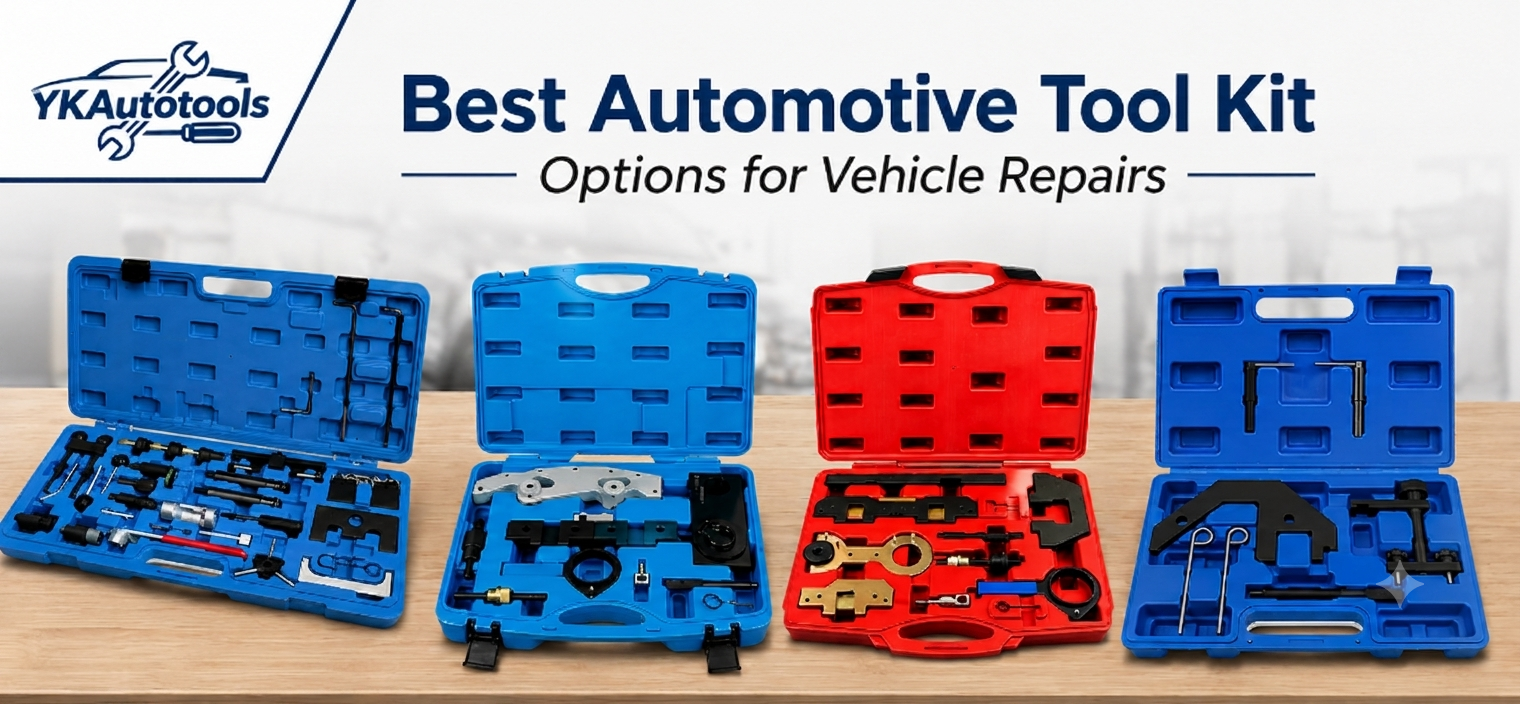
Most garages run into the same problem: too many tool kits claiming to do everything, and not enough clarity on what actually matters for the job at hand. Picking the right Automotive Tool kit isn’t about buying the biggest case on the shelf- it’s about matching the tools to the repair you’re actually doing. A weekend oil change needs a completely different setup than a timing chain replacement on a BMW M54. This guide breaks down the real differences between general-purpose kits, specialty tools, and engine-specific sets, so the decision gets easier instead of more confusing.
What Counts as a General Auto Repair Tool Kit
Most people’s first experience with an auto repair tool kit is a broad set- sockets, wrenches, pliers, screwdrivers, all bundled into one case. These are genuinely useful for:
- Routine maintenance like oil changes, filter swaps, and battery replacement
- Minor fixes such as loose interior trim, squeaky hinges, or worn wiper arms
- Emergency roadside situations, including flat tires and dead batteries
- Light DIY work that doesn’t require brand-specific tooling
General kits are a fine starting point, but their biggest limitation shows up the moment a repair gets specific to one manufacturer’s engineering. A 200-piece socket set won’t help much when a job calls for a tool shaped to fit one exact engine bracket.
Why Specialty Tools Matter for Modern Engines
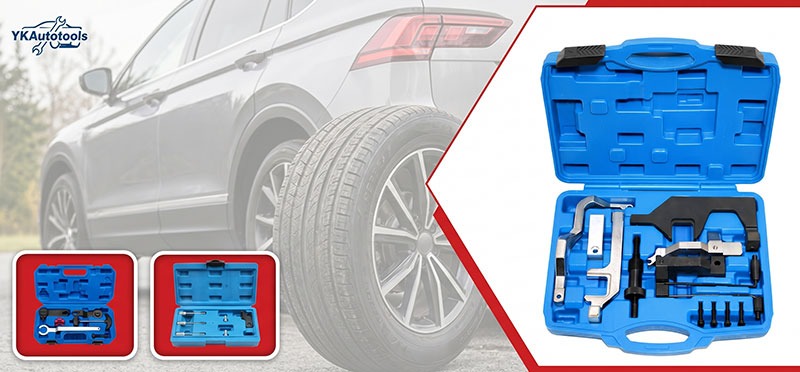
European cars in particular weren’t designed with universal repair access in mind. BMW, VW, and Audi all use proprietary locking points, sprocket designs, and tensioner systems that simply don’t accept generic tools. This is where Automotive specialty Tools come in- built to match one engine family’s exact dimensions rather than approximating a fit.
Trying to force a standard tool into a job designed for a specialty one usually leads to:
- Stripped bolts or damaged sprockets from improper leverage
- Incorrect camshaft or crankshaft positioning during reassembly
- Wasted labor hours redoing a job that wasn’t aligned the first time correctly
- In the worst cases, bent valves from a timing mistake on an interference engine
Engine Timing Tool Kits: What They Actually Do
Timing kits exist because camshafts and crankshafts have to be locked into an exact position before a belt or chain comes off- and that position has to stay locked through reassembly. A proper timing tool kit typically includes:
- A camshaft locking tool to hold position during disassembly
- A crankshaft TDC (top dead center) locking pin
- A chain or belt tensioner locking pin to control tension safely
- A sprocket holding tool to prevent rotation during bolt removal
- Sometimes, a pneumatic adapter for systems like BMW’s VANOS, which need air pressure testing during the process
Skipping any one of these steps- even with the right intentions- is how a routine timing job turns into a much bigger repair bill.
Injector Tools: A Smaller Category That Solves Bigger Problems
Fuel injectors on direct-injection engines, like BMW’s N20, N26, and N55, sit deep in the cylinder head and are notoriously prone to seizing in place over time, especially with carbon buildup. A dedicated injector puller applies even, controlled force to remove a stuck injector without cracking the surrounding housing- something a pry bar or generic puller seldom manages cleanly.
Comparing General Kits vs. Specialty Engine Tool Kits
| Feature | General Auto Repair Kit | Specialty Engine Tool Kit |
| Best for | Routine maintenance, minor repairs | Timing jobs, injector removal, engine-specific tasks |
| Vehicle compatibility | Broad, non-specific | Matched to exact engine codes (e.g., M54, N55) |
| Risk if misused | Low | High- incorrect timing can damage the engine |
| Typical pieces | 100–200+ | 1–11, engine-specific |
| Reusability across vehicles | High | Limited to compatible engine families |
| Investment value | Good for general ownership | Essential for anyone repeatedly working on the same engine family |
How to Match a Tool Kit to Your Repair Job
Before buying anything, it helps to ask a few honest questions:
- What’s the actual job? Routine maintenance calls for general tools. Timing, VANOS, or injector work calls for something engine-specific.
- What engine code am I working with? BMW alone has used dozens of engine families (M50, M52, M54, M56, N20, N55, W16D, and more), and timing tools rarely cross over between them.
- How often will this tool get used? A specialty kit used once a year still pays for itself by preventing a single costly mistake.
- Does the kit include documentation? Reference instructions and part-number cross-references reduce guesswork significantly during reassembly.
Common Mistakes When Choosing an Automotive Tool Kit
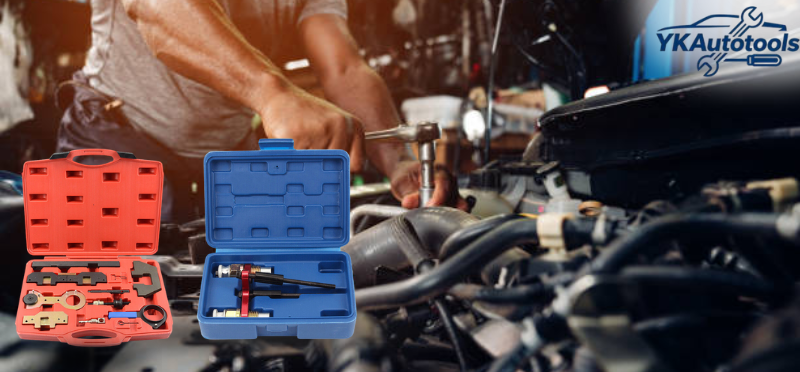
- Buying a generic timing kit and assuming it fits “most BMWs”- engine families differ enough that this rarely works cleanly
- Skipping the locking pin or tensioner tool because the job “looks simple” without it
- Ignoring case organization, which makes it easy to lose a small but critical pin mid-job
- Choosing the cheapest available kit without checking the material- soft metal pins bend under pressure and lose their fit over repeated use
Specialty Engine Timing and Injector Tools for BMW Engines
For anyone working specifically on BMW and BMW Mini engines, having the correct tool matched to the exact engine code removes most of the guesswork from these jobs:
- Injector removal and installation tool for BMW N20, N26, and N55 engines– A steel injector puller built specifically for these direct-injection engines, designed to remove seized or stuck injectors without damaging the cylinder head. Comes in a single-piece kit weighing 1.5 kg.
- Engine timing tool kit for BMW Mini (W16D)– A 6-piece steel kit suited to Mini and Mini Clubman models (2007–2010, R55/R56/R57 chassis), with some crossover compatibility for certain Citroën and Peugeot models that share the same engine architecture.
- BMW M52TU/M54/M56 Double VANOS timing tool set– A 5-piece steel and aluminum alloy kit built specifically for BMW’s Dual VANOS variable valve timing system on 6-cylinder gasoline engines from 1998 onward. It includes a timing setup bracket, sprocket locking tool, air adapter, chain tensioner locking pin, and primary chain tensioner tool- covering the full process from disassembly through pneumatic testing of the VANOS unit.
- 11-piece comprehensive BMW engine timing tool kit– Covers a wider range of engines (M40, M42, M43, M44, M50, M52, M54, M56), making it a practical option for shops that service multiple BMW generations rather than just one engine family. Includes operating instructions with cross-references to original part numbers.
- BMW M42, M52, M54, M56, M50 (3.0L) timing tool kit– A 9-piece steel set built for Dual VANOS engines used in BMW’s X3, X5, and 7 Series models, including camshaft locking tools, a VANOS wrench, sprocket alignment tool, chain tensioning tools, locking pins, and a VANOS pneumatic connector.
Each of these kits solves a narrow but specific problem: locking the right components in the right place, on the right engine, without relying on improvised tools that risk damaging expensive parts.
Final Thoughts on Choosing the Right Tool Kit
There’s no single “best” automotive tool kit that covers every repair scenario; the right choice depends entirely on the work being done and the engine being serviced. General kits remain useful for everyday maintenance, but anyone working on European engines with proprietary timing systems will eventually need tools built to match those specific designs. But anyone working on European engines with proprietary timing systems will eventually need tools built to match those specific designs. YK Auto Tools focuses specifically on this kind of specialty equipment, offering engine-matched timing and injector tools for BMW, VW, Audi, and related platforms, which makes it a relevant option for anyone trying to move beyond generic kits and into precision-matched repair tools.