
Professional BMW MINI Timing Tools for Efficient Vehicle Maintenance

Professional BMW MINI Timing Tools for Efficient Vehicle Maintenance

Modern BMW MINI engines are built with precise timing systems that require accurate servicing. During engine repairs, even a small timing error can affect performance and lead to expensive damage. That is why BMW MINI Timing Tools have become an important part of professional vehicle maintenance. These specialized tools help mechanics lock engine components in the correct position while replacing timing chains, camshafts, or related parts. Understanding how these tools work can help workshops perform safer, faster, and more accurate repairs.

Why Accurate Engine Timing Matters

Engine timing controls the movement of the crankshaft, camshaft, and valves. These components must remain perfectly synchronized for efficient combustion and smooth engine performance. Even a slight timing error can reduce fuel efficiency, increase engine noise, or cause serious internal damage.

Using dedicated timing tools helps maintain factory timing specifications throughout the repair process. Instead of relying on manual alignment, technicians can secure critical engine components with confidence, reducing the possibility of mistakes.

BMW MINI Timing Tools

Many BMW MINI engines use timing chains instead of timing belts. Timing chains usually last longer, but do wear out over time and will eventually need replacement. During this procedure, special locking and alignment tools are needed to keep the engine timing exact.

A complete Timing Chain Tool kit generally includes locking pins, crankshaft locking tools, camshaft alignment fixtures, tensioner tools, and positioning gauges. Together, these tools help maintain the exact relationship between moving engine components while repairs are being completed.

Without proper timing tools, technicians may struggle to align the engine correctly, increasing the risk of costly engine repairs.

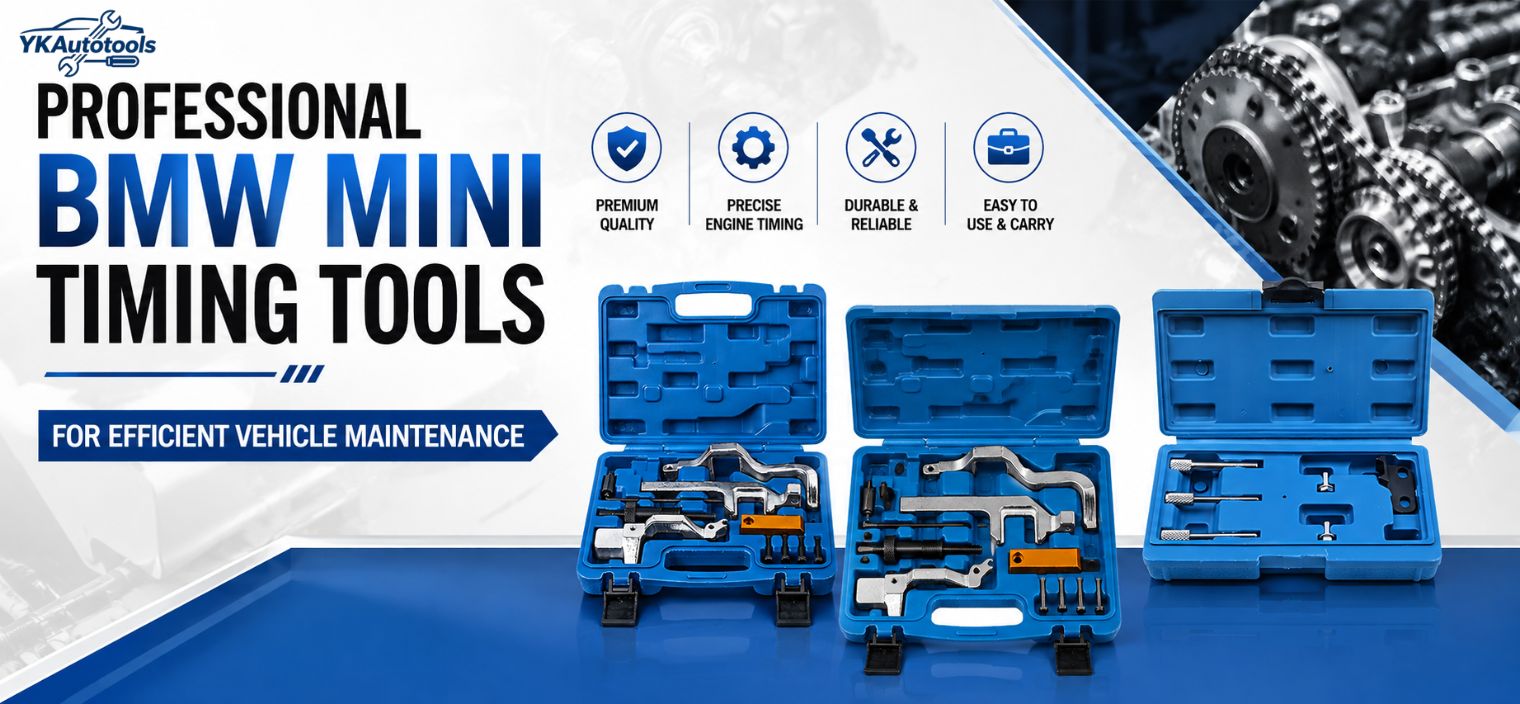
Auto Repair Tool Kits BMW MINI N12 & N14 Engine Timing Tool Kit Compatible with MINI, 207, 3008 (1.6T)

The MINI N12 Timing Tool kit helps with accurate timing repairs on BMW MINI N12 and N14 engines. It also works on selected Citroën and Peugeot vehicles that use the same engine type. Getting the camshaft and crankshaft in the exact right position matters a lot during timing chain work. Even a small mistake here can hurt engine performance, use more fuel, or cause damage inside the engine. This kit helps technicians lock everything in place safely and precisely.

This kit works with many different vehicles. This makes it a smart pick for workshops that handle more than one brand. It fits models like the BMW MINI One R56, MINI Cooper R55/R56, MINI Cooper S R55/R56, Peugeot 207, 207CC, 308, 3008, 5008, and Citroën C4 and C4 Picasso.

The kit is made from strong steel. It has 10 pieces in total. It holds up well under regular workshop use. It also keeps its exact shape over time. It comes in a small case. This keeps the tools safe and organized. This kit is built for 1.4L and 1.6L gasoline engines with chain-driven timing, including BMW N12, N14, and some PSA EP-series engines.

For professionals, this kit saves time. It also lowers the risk of getting the timing wrong. Instead of aligning everything by hand, mechanics can work with more confidence. This leads to better repairs. It also helps the engine run the way it should after everything is put back together.

Engine Timing Tool Kit for BMW MINI (W16D)

The Engine Timing Tool Kit for BMW MINI (W16D) is developed specifically for servicing W16D engine applications found in selected MINI models. Unlike universal timing kits that cover a broad range of engines, this kit focuses on providing the exact tools required for W16D timing procedures. Its specialized design allows technicians to perform timing chain replacement, camshaft alignment, and engine maintenance with greater precision while reducing the chances of installation errors.

This timing tool kit is suitable for:

  • MINI R55
  • MINI R56
  • MINI R57
  • Selected Citroën models
  • Selected Peugeot models

Professional vs Universal Timing Tool Kits

Many mechanics wonder whether a universal timing kit is sufficient or if a dedicated Timing Chain Tool kit is a better investment. While universal kits may work for basic applications, professional vehicle maintenance requires tools designed specifically for individual engine families.

Dedicated BMW MINI timing kits are manufactured with precise dimensions that match factory specifications. This ensures accurate alignment during timing chain replacement and other engine repairs.

FeatureDedicated BMW MINI Timing ToolsUniversal Timing Tools
Engine CompatibilityDesigned for specific enginesCovers multiple brands
AccuracyHigh precisionModerate precision
Repair SpeedFasterSlower
Risk of Incorrect AlignmentVery lowHigher
Professional Workshop UseHighly recommendedLimited

For workshops that regularly service BMW MINI vehicles, dedicated timing kits often provide greater long-term value.

Benefits of Using Professional BMW MINI Timing Tools

Professional timing tools are designed to simplify complex engine repairs while maintaining factory accuracy. Instead of estimating alignment positions, technicians can securely lock engine components before removing or installing the timing chain.

Some important advantages include:

  • Accurate camshaft positioning
  • Secure crankshaft locking
  • Reduced repair time
  • Improved engine reliability
  • Lower risk of valve damage
  • Better repair consistency
  • Easier engine reassembly

Using specialized tools also reduces technician fatigue because engine timing becomes more straightforward and repeatable.

Who Can Use BMW MINI Timing Tools?

Although timing tools are often associated with professional workshops, they are also valuable for experienced independent mechanics who regularly service BMW MINI engines.

These tools are suitable for:

  • Professional automotive repair shops
  • Independent BMW specialists
  • Engine rebuilding workshops
  • Fleet maintenance centers
  • Technical training institutes
  • Experienced DIY mechanics with advanced engine repair knowledge

Using the correct tools allows technicians to perform complex timing procedures with greater confidence and accuracy.

Conclusion

Maintaining accurate engine timing is one of the most important aspects of BMW MINI engine repair. Whether servicing an N12, N14, or W16D engine, the correct timing tool kit helps ensure proper alignment, reduces repair errors, and supports reliable engine performance. Investing in professional-quality timing tools not only improves repair efficiency but also helps protect valuable engine components from unnecessary damage.

YKAutotools provides a comprehensive range of professionally engineered BMW MINI Timing Tools, designed for precise engine timing, maintenance, and repair. Our collection includes specialized solutions for MINI N14 Timing Tool, Timing Chain Tool, and MINI N12 Engine applications. Built for accuracy, durability, and compatibility with a wide range of BMW MINI models, these high-quality tool kits help technicians perform reliable, efficient, and professional repairs with confidence.
BMWfuelinjectorremovaltoo (1)

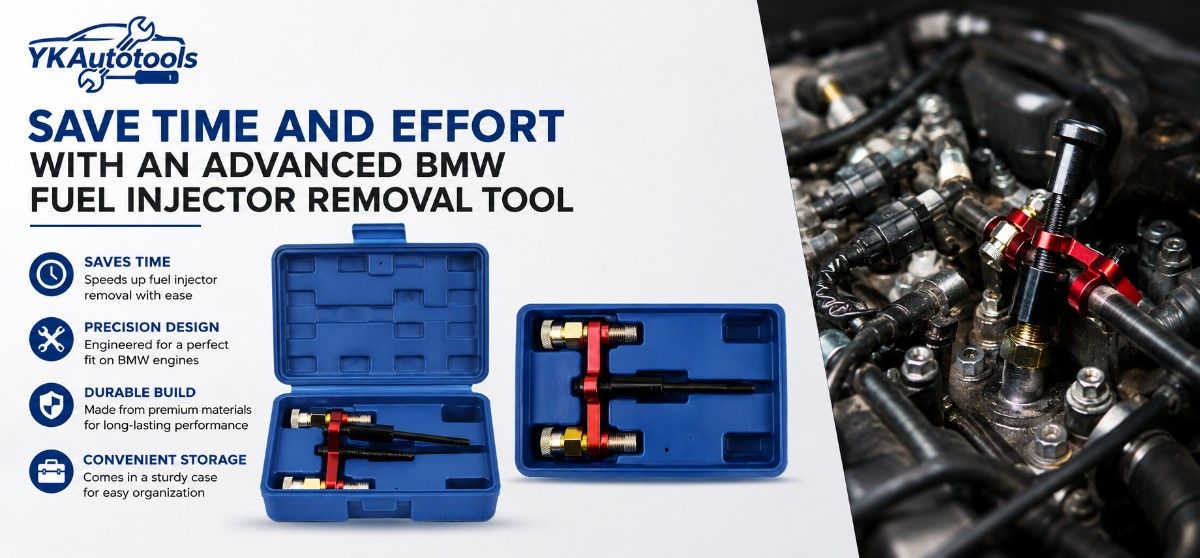
Save Time and Effort with an Advanced BMW Fuel Injector Removal Tool

Ask any technician who has worked extensively on BMW engines what jobs they’d rather avoid, and injector removal tends to come up early in the conversation. It’s not that the job is conceptually complicated – it’s that the conditions inside a high-mileage BMW engine conspire against clean, straightforward extraction in ways that catch people off guard the first time. Carbon, heat, corrosion, tight engine packaging – all of it working against you simultaneously. A professional BMW fuel injector removal tool doesn’t make those conditions disappear, but it changes the outcome considerably. The difference between a job that goes well and one that ends with a broken injector body and an unplanned cylinder head repair often comes down entirely to what equipment was used.

Why Fuel Injectors Become Difficult to Remove

Fuel injectors spend their working life exposed to conditions that would degrade most mechanical components – extreme heat, high pressure, thousands of thermal expansion and contraction cycles, and whatever comes through the fuel system in terms of deposits and contamination. Over time, all of that leaves a mark.

Carbon accumulates around the injector body and essentially bonds it to the surrounding metal. Moisture causes corrosion that does the same thing from a different direction. Extended service intervals allow deposits to build up beyond what occasional cleaning would address. Contaminated fuel systems accelerate all of it. By the time someone decides an injector needs to come out, it often has no intention of cooperating.

Standard hand tools apply force in ways that weren’t designed for this situation. The result is broken injectors, damaged fuel rails, and cylinder head repairs that cost considerably more than the original job was ever supposed to.

Understanding the Purpose of a Fuel Injector Removal Tool

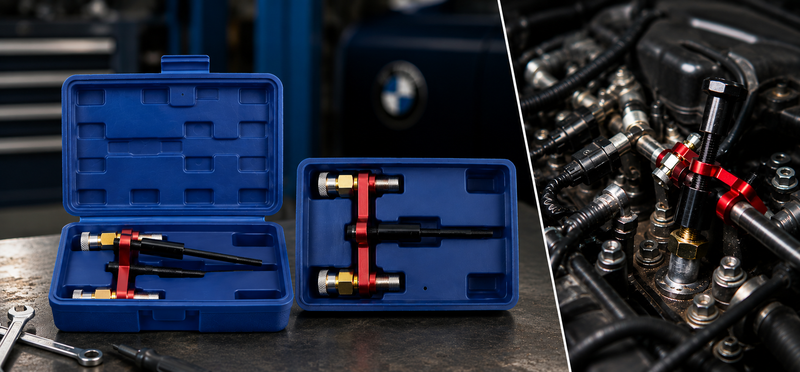
A dedicated fuel injector removal tool works differently from improvised alternatives in one fundamental way – it applies force evenly across the injector assembly rather than concentrating it at a single point. That distinction is what makes the difference between an injector that comes out intact and one that doesn’t.

Even pressure across the assembly means delicate components aren’t being stressed unevenly. Stubborn injectors that have been seated for years respond to controlled, balanced extraction force in a way they simply don’t respond to brute force applied with the wrong equipment. Faster extraction, reduced breakage risk, better protection of the fuel rail components, improved safety for the technician, lower overall repair costs – these aren’t theoretical benefits. They’re what consistently happens when the right tool gets used for the right job.

How BMW Injector Extraction Kits Improve Efficiency

BMW engines are tightly packaged. The fuel systems are precisely integrated in ways that leave limited room for error during servicing, and the injector removal process reflects that reality.

  • An advanced injector extraction kit brings together everything needed for each stage of the job.
  • Includes injector pullers, slide hammers, adapter sets, support brackets, and alignment tools.
  • Reduces the need for extensive disassembly to create working space.
  • Jobs move through the workshop considerably faster when the correct extraction kit is available.
  • Servicing accuracy improves alongside speed, which matters for repeat business and workshop reputation.

The Difference Between Universal and BMW-Specific Injector Tools

Universal injector tools have their place, but BMW fuel systems sit in a different category. The injector dimensions, mounting configurations, and direct-injection system characteristics found across BMW engine families don’t always accommodate generic tooling well. Adapters that almost fit create slippage risk. Extraction mechanisms designed for different injector geometries apply force in directions that BMW injectors weren’t designed to handle.

BMW-specific tools are engineered around the actual specifications of the engines they’re designed to service. Better fitment means more reliable extraction control. Reduced slippage risk means better outcomes on injectors that are already under stress from corrosion or carbon buildup. The compatibility with direct-injection systems that BMW has used extensively across recent engine families is designed in rather than worked around. For anyone servicing BMW vehicles regularly, the difference between specific and universal tooling shows up in every difficult extraction job.

The Role of a Fuel Injector Installation Tool

Getting the injector out is half the job. The other half – reinstallation – gets less attention in most conversations about injector servicing, and that’s where a lot of preventable problems originate. An injector seated incorrectly, with damaged seals or misaligned mounting, creates fuel delivery issues, leak risks, and performance problems that are difficult to diagnose because they don’t immediately present as installation errors.

A fuel injector installation tool positions injectors correctly while protecting seals and mounting surfaces during the process. Proper alignment, consistent fuel delivery, reduced leak risk, better engine performance, and extended injector lifespan – all of these follow from installation done properly with the right equipment. Factory-level accuracy during reassembly isn’t achievable by hand in the way it is with purpose-built installation tooling. The technicians who understand this tend to have significantly fewer comeback jobs related to injector servicing.

Common Challenges During Injector Removal

Stuck injectors are the obvious challenge, but they’re not the only ones. Damaged retaining clips that complicate disassembly, carbon buildup around injector seats that needs to be addressed before extraction can begin, working space so limited that standard tool approaches simply don’t fit, injector body fractures that turn a removal job into a recovery operation – these are the situations that separate technicians who have the right equipment from those who don’t.

An advanced extraction kit provides multiple removal options depending on what the specific situation calls for. A mildly stuck injector needs a different approach from one that has been seated for a decade in a high-mileage engine with significant corrosion. Having the options available, rather than forcing a single approach regardless of conditions, is what allows difficult jobs to be completed without escalating into expensive secondary damage.

Engine Compatibility Considerations

BMW has built a significant number of distinct engine families, and they don’t all handle injector servicing identically. N20, N54, N55, N63, B48, B58 – each has its own injector configuration, its own clearances, its own requirements in terms of extraction approach and adapter selection.

Verifying compatibility before purchasing a tool kit isn’t an optional step. The wrong adapter on a specific engine platform doesn’t just fail to help – it creates risk. Getting confirmation that the kit covers the intended engine platform before any work begins prevents the kind of mid-job discovery that wastes time and creates problems. Workshops servicing a range of BMW models need kits with broad compatibility across engine families, and that breadth should be confirmed explicitly rather than assumed.

How Advanced Extraction Kits Reduce Repair Risks

Accidental damage during injector servicing is expensive in multiple directions simultaneously – the component damage itself, the additional labour to address it, the extended downtime for the vehicle, and the impact on the workshop’s reputation if the damage happened under their care. Professional extraction kits reduce all of these risks through the same mechanism that makes them faster: a balanced extraction force that minimises stress on injector bodies, cylinder head components, and fuel rail connections throughout the removal process.

The confidence that comes from working with proper equipment changes how technicians approach difficult extractions. Less improvisation, less excessive force applied out of frustration, more predictable outcomes – these are the practical effects of having the right tools available rather than making do with alternatives.

Workshop Productivity Benefits

Time is what workshops sell, essentially. Every hour spent wrestling with a seized injector using inadequate equipment is an hour that isn’t generating revenue from another vehicle. A BMW injector installation tool and extraction kit that reduces service time on injector jobs, improves accuracy, lowers technician fatigue on difficult extractions, decreases repeat repairs from installation errors, and improves workflow consistency – all of that has a direct financial translation.

The workshops that invest properly in specialist tooling for high-frequency jobs tend to handle more vehicles, maintain higher quality standards, and retain the technicians who know their tools are adequate for what they’re being asked to do. It’s not a complicated equation once you’ve worked through one difficult injector job with the wrong equipment.

Signs That Injector Servicing May Be Required

Rough idling that wasn’t there previously. Fuel efficiency has dropped noticeably without an obvious explanation. Engine misfires that come and go. A difficult cold starts. Exhaust emissions have increased. Acceleration that feels hesitant or flat under load. Any of these individually might have other causes, but several of them together point fairly directly toward the fuel injection system as the place to look first.

Catching injector issues early tends to mean cleaner extraction when the time comes. Injectors that have been operating poorly for an extended period in a deteriorating fuel system are often harder to remove than those addressed promptly. Early diagnosis serves the mechanical outcome as well as the customer’s overall repair bill.

Best Practices for Safe Injector Removal and Installation

The tools do a lot of the work, but procedure matters alongside equipment. Battery disconnected before work begins. Fuel system pressure is relieved properly before any fuel line connections are broken. The injector area gets cleaned thoroughly before removal to prevent debris from entering the cylinder. Seals and O-rings are inspected during installation rather than assumed to be serviceable. Manufacturer torque specifications followed on reinstallation rather than being estimated by feel.

None of these steps is difficult, but each one is where shortcuts create problems. The technicians who do this work consistently well tend to follow the same disciplined approach every time – not because each step feels critical in isolation, but because the accumulated effect of doing all of them correctly is a job that stays fixed.

Long-Term Benefits of Using Professional Injector Tools

A quality extraction and installation kit isn’t a single-use purchase. It goes through vehicle after vehicle, pays for itself on the first job it prevents from going wrong, and continues delivering returns through reduced component damage, faster servicing times, fewer comeback repairs, and the kind of consistent results that build the workshop’s reputation for doing injector work properly.

For technicians who take their work seriously and for workshops where quality matters commercially, the argument for investing in proper equipment rather than adequate equipment resolves fairly quickly once the alternative costs get added up honestly.

Conclusion

BMW fuel systems don’t respond well to imprecision, and injector servicing is where that reality makes itself felt most directly. A quality BMW fuel injector removal tool manages how that work goes – faster, safer, with better outcomes and lower risk of the kind of damage that turns a straightforward service into an expensive repair. For technicians and workshops looking for dedicated BMW injector servicing solutions built to those standards, get a range of tools designed specifically for safe, efficient, and professional injector removal and installation.